Focus 1
Personalized healthcare
AI that fits care and health information to the individual, built and tested with clinicians in Qatar and the region.
موفق سعيد حوسة
Professor of Health Informatics, College of Science and Engineering, Hamad Bin Khalifa University, Qatar
My research focuses on two areas: personalized healthcare, where AI tailors care and health information to each person, and autonomous and semi-autonomous scientific discovery, where AI agents take part in doing and sharing research. I lead HIKMA, a first-of-its-kind conference where AI wrote, reviewed and presented the research.
Profiles: Google Scholar Scopus ORCID ResearchGate edX HBKU research portal

Paper count from Scopus. Citation metrics from PlumX via the HBKU research portal, 2026. Live figures on Google Scholar.
Prof. Mowafa Said Househ (موفق سعيد حوسة), PhD, is a full professor of health informatics in the Arab World and is associated with Hamad Bin Khalifa University’s College of Science and Engineering, at the Qatar Foundation.
His research focuses on two areas. The first is personalized healthcare: using artificial intelligence to fit care and health information to each person, from AI-assisted fetal ultrasound and personalized nutrition to digital mental health, an area in which he has a long-standing interest. The second is autonomous and semi-autonomous scientific discovery: building AI agents that can generate, review and communicate research while people stay in control. Across both, he aims to use technology to benefit patients and healthcare professionals alike.
He also leads HIKMA (Human-Inspired Knowledge by Machine Agents) at HBKU. In 2025 he led the HIKMA conference, a first-of-its-kind experiment in which AI agents wrote the papers, peer-reviewed them and presented them, with people overseeing every stage. The project has since grown into HikmaTech, an AI-powered research ecosystem with its own open repository of AI-generated, human-checked papers.
In 2026 Prof. Househ received the Abdul Hameed Shoman Award for Arab Researchers in digital health and telemedicine, and second place in the GHAIN MENA Scale-Up Award. He was named Best Educator of the Year at the 2024 ZIMAM Digital Health Awards, and in 2020 he received first place in the United Nations ITU Artificial Intelligence Challenge. His work has also been recognized with the Researcher Award from the King Abdullah International Medical Research Centre in 2015, the MBC Hope Awards for Innovation and Social Entrepreneurship in 2015, and as a finalist for the Massachusetts Institute of Technology Arab Enterprise Forum competition in 2014. Additional recognitions include the Young Researcher Award in 2010, the Northern British Columbia Healthcare in Technology Award in 2007, and the Michael Smith Foundation for Health Research Trainee Award in 2003.
Prof. Househ also holds the position of adjunct Associate Professor at the University of Victoria’s School of Health Information Science in Victoria, BC, Canada.
With a scholarly contribution of over 380 research papers (see Scopus) and more than 14 books, Prof. Househ’s work in health informatics has been influential in both the academic realm and practical application, impacting healthcare practices in the Arab world and internationally. He is also the author of the memoir Under the Nakba Tree, the story of his Palestinian family’s journey to Canada.
Two connected questions: how AI can make healthcare personal to each patient, and how AI can take part in scientific discovery itself.
Focus 1
AI that fits care and health information to the individual, built and tested with clinicians in Qatar and the region.
Focus 2
AI agents that find data, write, review and present research, with people setting direction and checking every step.
Five stages, from public health informatics to personalized healthcare and AI-driven discovery, each building on the last.
2006 – 2015
Health planning in Canada, then the ethics and uses of social media in healthcare and regional collaboration through MENAHIA.
2015 – 2018
How patients in Saudi Arabia and the Gulf use mobile apps and online information to manage diabetes, asthma and mental health.
Key workOnline health information seeking and self-care in type 2 diabetes
2019 – 2021
Reviews of mental-health chatbots, AI against COVID-19 and public sentiment on Twitter. The team’s ESRA app won the ITU AI for Development Challenge.
Key workFeatures of chatbots in mental health: a scoping review
2022 – 2024
Large language models in medical education, wearable AI for anxiety and depression, and a regulatory framework for health AI in Qatar.
Key workThe pros and cons of using ChatGPT in medical education
2025 – now
AI tailored to each patient, from fetal ultrasound to personalized nutrition and mental health, alongside HIKMA’s experiments in autonomous and semi-autonomous scientific discovery.
Key workDigital mental health needs a purpose-driven approach (Nature Human Behaviour)
A conference where AI wrote, reviewed and presented the research
HIKMA, short for Human-Inspired Knowledge by Machine Agents, asks what happens when AI takes part in every step of scholarly communication. For the HIKMA 2025 conference, AI agents found datasets, drafted manuscripts, reviewed and revised them, and then presented the accepted papers as narrated avatar talks.
People stayed in charge throughout: researchers screened the data, audited the outputs and approved what was released. The aim is to amplify scholars, not replace them. In Prof. Househ’s words, “This is not about replacing scholars, it’s about amplifying them.”
AI for safer, more accessible prenatal care
Fetal ultrasound is one of the most widely used exams in pregnancy, but reading it well takes years of training. AMAL-For-Qatar is building an AI ecosystem that helps clinicians find the right anatomical planes, judge image quality and annotate scans, including in settings with limited specialist support.
At its centre is FADA, a compact vision-language model that explains what it sees in a scan. The project is based at HBKU’s College of Science and Engineering, with Dr. Marco Agus as lead principal investigator and a team of doctoral researchers.
The work is now growing into AI Scholar MaternaCare, a maternal health platform for the region built with the American University of Beirut and funded by IDRC Canada and the UK’s FCDO. It took second place in the 2026 GHAIN MENA Scale-Up Award.
Other funded research, and digital health tools that have come out of the group.
An agentic retrieval framework that drafts reliable patient education material in general medicine and oncology from tens of thousands of trusted health articles, with clinicians reviewing the output.
Developed a regulatory framework for artificial intelligence in precision medicine and health technologies for Qatar and the wider Middle East.
An AI tool that reads children’s drawings and gives parents, teachers and therapists feedback on emotional wellbeing over time. It took first place for the Middle East and Africa in the ITU AI for Development Challenge, was nominated to the Paris Peace Forum, and was Highly Commended for Research Project of the Year at the 2022 Times Higher Education Awards Arab World.
A mental-wellbeing app that brings together spiritual heritage and evidence-based digital mental health for individuals and families in Qatar and the region.
A selection from more than 380 papers indexed in Scopus. Filter by theme, or open any title to go to the paper.
Awards, new research, events and press coverage, newest first. For interviews and comment, see Get in touch.
The award, one of the leading research prizes in the Arab world, recognises his work in digital health and telemedicine.
About the awardRecognised for bringing AI-assisted fetal ultrasound and maternal health tools into clinical use across the region.
About MaternaCareCoverage of the project he leads, where AI writes, reviews and presents research under human oversight.
Qatar News AgencyWins the Abdul Hameed Shoman Award for Arab Researchers in digital health and telemedicineAbdul Hameed Shoman Foundation
AI Scholar MaternaCare takes second place in the GHAIN MENA Scale-Up AwardSupported by IDRC Canada and the UK’s FCDO
AMAL-For-Qatar project overview publishedStudies in Health Technology and Informatics
FADA, a vision-language model for fetal ultrasound interpretationarXiv
Sukunn digital mental health app presentedMedical Informatics Europe 2026
Perspective: digital mental health needs a purpose-driven approachNature Human Behaviour
HBKU launches AI-powered ecosystem to transform scientific discovery in QatarMENA Startup Digest
HBKU’s HIKMA project launches AI-powered research ecosystem from QatarMarhaba Qatar
HBKU’s HIKMA project launches AI-powered research ecosystemHBKU News
HBKU launches HIKMA project: AI-powered research ecosystem from QatarQatar News Agency
How well do vision LLMs read fetal ultrasound? A benchmarkBioMedical Engineering OnLine
HIKMA 2025: AI agents write, review and present 30 research papersHBKU, Doha
Agentic RAG framework for patient education materialBMJ Health & Care Informatics
Shortlisted for Research Project of the YearTimes Higher Education Awards Arab World, Amman
Named Best Educator of the Year at the ZIMAM Digital Health AwardsHBKU News
CSE digital health program earns ‘Academic Institute of the Year’HBKU News
“AI will revolutionize healthcare, but it may take time”HBKU News
ESRA Highly Commended for Research Project of the YearTimes Higher Education Awards Arab World, Abu Dhabi
Named among the world’s top 2% most-cited scientistsGulf Times
Group’s digital mental health tools presented in New York and CalgaryQatar Tribune
Op-ed: the importance of digital health technologies in a pandemicHBKU News
Elected Fellow of the International Academy of Health Sciences InformaticsGulf Times
HBKU faculty member elected as fellow of prestigious IAHSIQatar Tribune
Among the winners in social entrepreneurship and start-upsMBC Hope (Arabic)
More than two decades of awards for research, teaching, innovation and social entrepreneurship, from Canada and the Gulf to the United Nations.
2026
Digital health and telemedicine, one of the leading research prizes in the Arab world
2026
For the clinical translation of AI Scholar MaternaCare, with support from IDRC Canada and the UK’s FCDO
2024
ZIMAM Digital Health Awards, at the 7th GCC eHealth Workforce Development Conference, Dubai
2022
Highly Commended, Research Project of the Year, for the ESRA project. Shortlisted again in 2025


2003
2006
2007
2008
2009
2010
2011
2012
2013
2014
2015
2016
2017
2018
2019
2020
2021

2022
2024
2025
2026
Scroll sideways to move through the years.
Prof. Househ teaches AI in healthcare to professionals worldwide through HBKU’s course on edX, and gives keynotes, guest lectures and hands-on training for universities, hospitals and professional associations.
A course from Hamad Bin Khalifa University on edX that helps clinicians and other healthcare professionals, technical and non-technical, engage confidently with AI in clinical and organizational settings. Learners explore deep learning, medical imaging and AI ethics, and build the knowledge to advocate for responsible AI in their own practice.

2019 – present
College of Science and Engineering, Hamad Bin Khalifa University, Doha, Qatar
2014 – present
School of Health Information Science, University of Victoria, Canada
2015 – 2016
Saudi National Medical Device Registry, Riyadh
2015
Centre for Tropical Medicine and Global Health, Nuffield Department of Medicine, University of Oxford, UK
2009 – 2018
Director of Scientific Research, 2010–2014.
College of Public Health and Health Informatics, King Saud bin Abdulaziz University for Health Sciences, Riyadh, Saudi Arabia
2006 – 2009
Northern Health Authority, Prince George, Canada
2001 – 2006
Systems analyst at Capital Health, Edmonton, then project and communication roles at the University of Victoria’s School of Health Information Science, including the Canadian Academic Detailing Collaborative with Harvard School of Public Health and UBC.
More than 14 books in health informatics, from social media and mobile health to artificial intelligence, alongside a family memoir.
Memoir · Athabasca University Press, 2022 · Open access
Fragments of a Palestinian Family in Canada
Traces his family’s flight from Palestine in 1948 and their resettlement in Edmonton in the 1970s. Written after a visit to the family’s homeland at the start of the Second Intifada, it reflects on displacement, identity and memory across generations.
Edited volume · Springer, 2021
With Elizabeth Borycki and Andre Kushniruk
Examines the opportunities and challenges of AI in healthcare from the viewpoints of nurses, physicians, patients, managers and data analysts. Includes his chapter on AI chatbots for mental health.
View on SpringerSelected books he has co-edited, alongside his memoir and the Springer volume above.
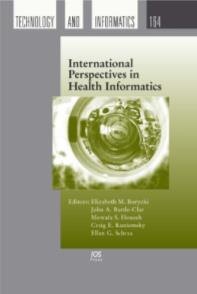
International Perspectives in Health InformaticsIOS Press, 2011
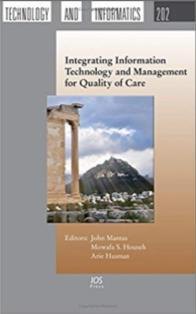
Integrating Information Technology and Management for Quality of CareIOS Press, 2014
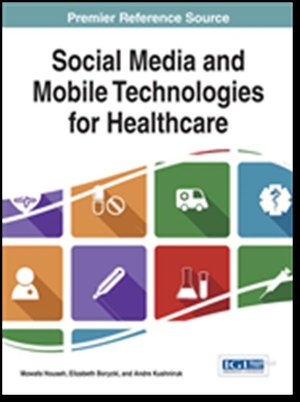
Social Media and Mobile Technologies for HealthcareIGI Global, 2014
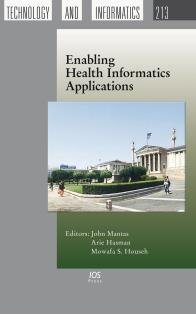
Enabling Health Informatics ApplicationsIOS Press, 2015
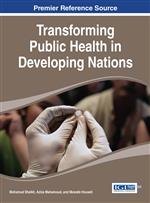
Transforming Public Health in Developing NationsIGI Global, 2015
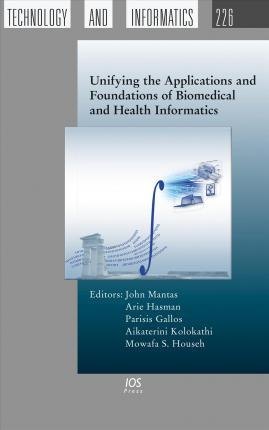
Unifying the Applications and Foundations of Biomedical and Health InformaticsIOS Press, 2016
Informatics Empowers Healthcare TransformationIOS Press, 2017
Email is the best way to reach Prof. Househ. Mentioning which of these fits your message helps it reach the right place quickly.
Interested in graduate research in digital health or AI in healthcare at HBKU? Write with a short note on your interests and your CV.
Email about graduate studyClinicians, universities and health organisations working on AI, digital mental health or consumer health informatics.
Propose a collaborationKeynotes, panels, peer review and press requests on digital health in Qatar and the Arab world.
Send a speaking or media request